



Health Savings Account
Tax-advantaged
savings members
own,
keep,
and can invest.


With 1 in 4 HSAs nationwide and 17.8M consumer-directed accounts,1 HealthEquity delivers employers unmatched
insights, smarter plan design, and lower costs and helps employees better save, spend, and invest for health.
With HealthEquity, your full benefits suite works together
for simplicity, savings, and a truly cohesive experience.
Health Savings Account
Flexible Spending Account
Pre-tax dollars for
eligible
healthcare
expenses.

Dependent Care FSA
Pre-tax savings for
child and elder care.

Health Reimbursement Arrangement
Employer-funded accounts
you design and control.
Health Payment Account
Pay for care over time,
with no interest or fees.

Commuter benefits
Pre-tax transit and parking.

Lifestyle Spending Account
Flexible, employer-funded
perks employees choose.
COBRA & Direct Billing
Continuation coverage
administration and billing.
 Qualifying event receivedNotice sentElection receivedPremium paid
What it’s worth to you
An HSA’s tax savings, in dollars. Pick your salary range.
Estimates use 2026 federal tax brackets and the standard deduction (IRS Rev. Proc. 2025-32), and FICA only on payroll contributions (6.2% Social Security up to the $184,500 wage base, plus 1.45% Medicare). For the top income range, estimates use the 32% rate. HSA limits: 2027 IRS limits.3
Explore a curated selection of health brands and everyday essentials,
with special member pricing on select offerings.
Marketplace
HealthEquity Visa® Card
One debit card for FSA and HRA together: you choose the payment order, and we handle the rest.
Employees pay for qualified medical expenses with the card or pay another way and reimburse themselves later.
A card net fraud rate in the top 1% and best-in-class of comparable healthcare portfolios.4
For over two decades HealthEquity HSAs have helped employers lower healthcare
costs and employees live healthier, more financially secure lives.
Expertise and data
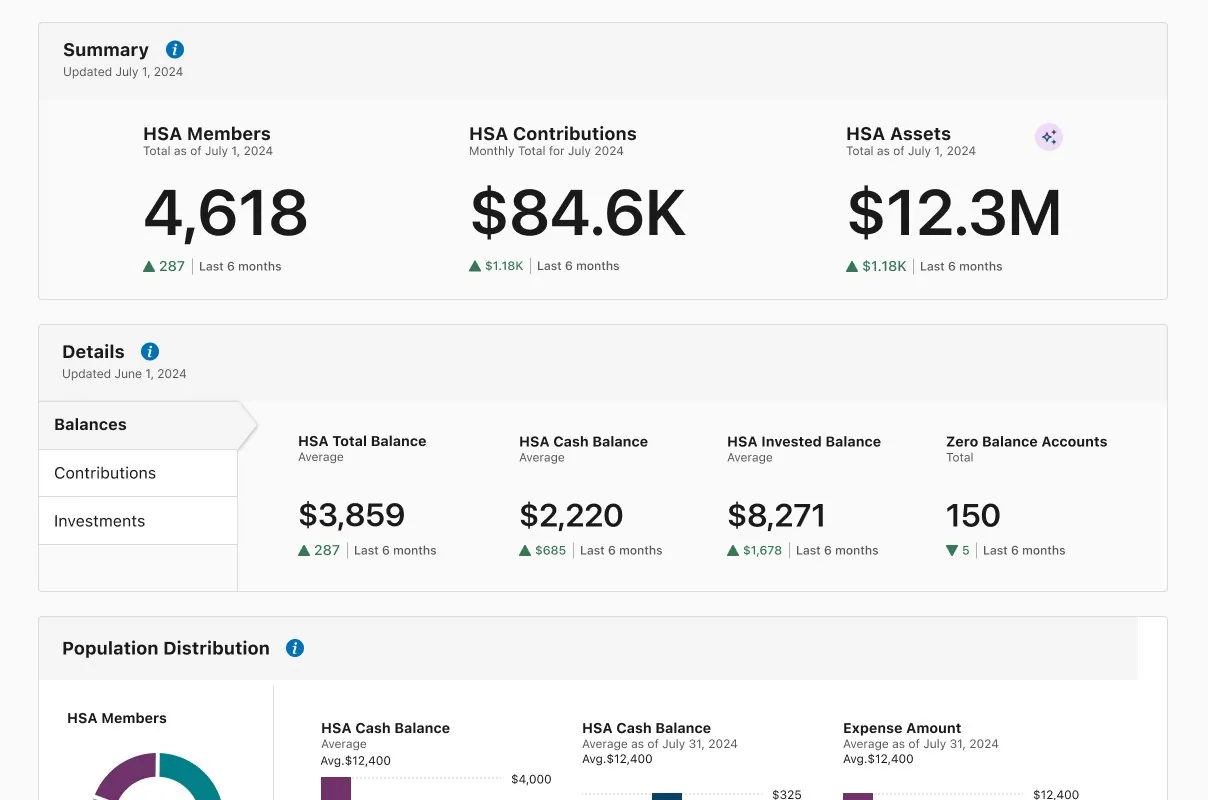
Providing data-driven
expertise
20+
years of HSA expertise
Mobile experience
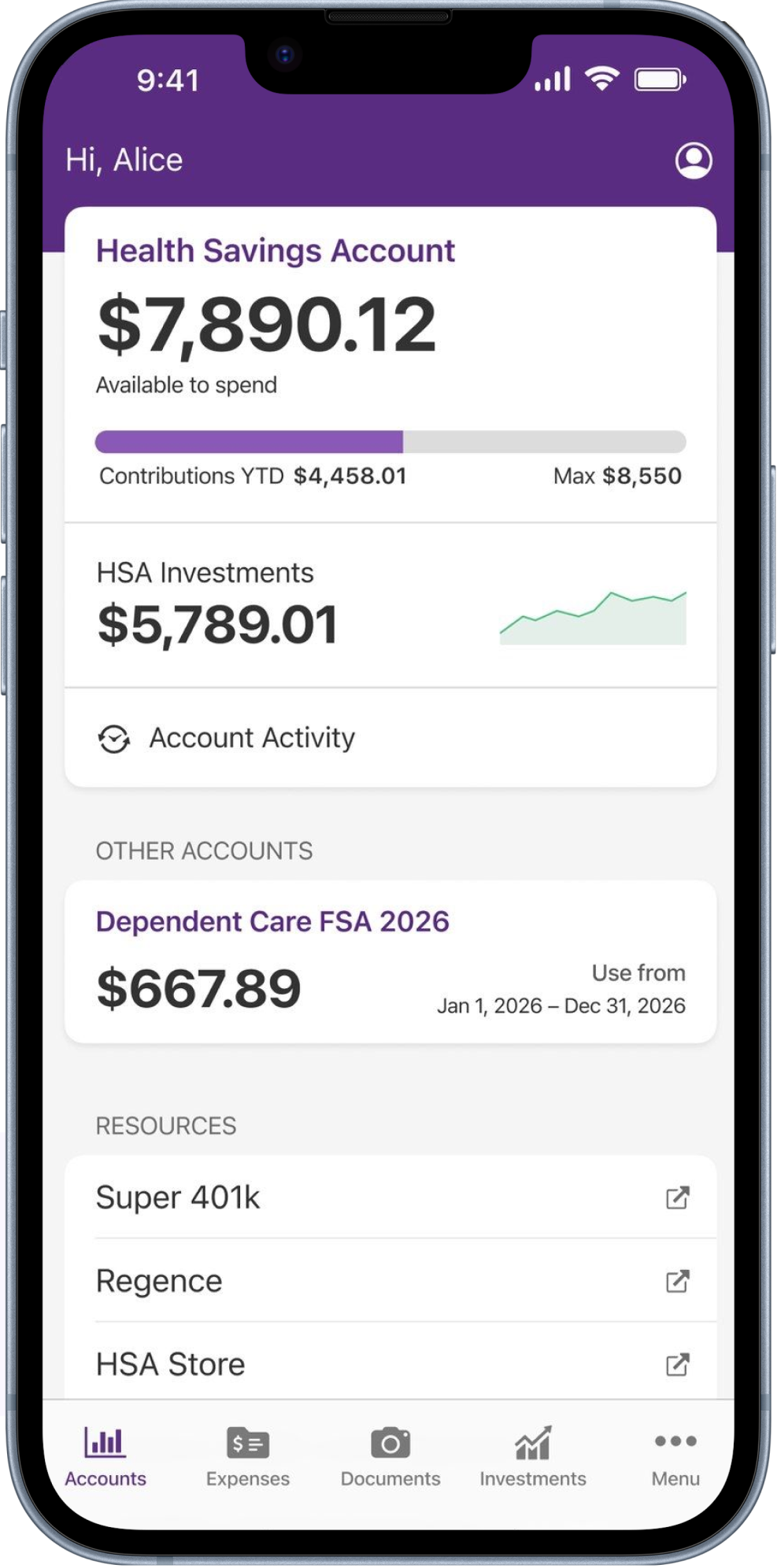
Delivering a best-in-class member experience
Analyzer

Empower your employees to achieve
wellness today and long-term financial
wellbeing tomorrow.

Access your funds and find resources
to help you make the most of your
benefits.

Simplify benefits and empower clients
with our end-to-end benefits
management.

Integrated benefits solutions to
enhance your company’s existing
health insurance offerings.

Achieved 80% enrollment while saving $10.5M annually.

Drove HSA investing participation to 39% with an average investing balance of $27.6K.

Boosted HSA enrollment by 20% in one year with multi-channel education campaign.

Increased investing by 110% and boosted HSA savings by $500 using HealthEquity Analyzer™.
HealthEquity Payments, LLC is a wholly owned subsidiary of HealthEquity, Inc. Copyright © 2002–2026 HealthEquity, Inc. All rights reserved.