
Key takeaways
- A successful return-to-office strategy depends on clear communication, flexible scheduling, and meaningful in-office opportunities.
- Commuter benefits can offset commuting costs, saving employees money, yet many workers don’t fully understand how to use them.
- Employers who address financial stress, prioritize flexibility, and foster collaboration are better positioned to retain talent and boost employee satisfaction.
See the most up-to-date commuter benefits limits here.
The shift back to in-office work is becoming a defining trend in today’s professional world. According to a 2024 Pew Research Center survey, 75% of employees who aren’t fully remote said their employer now requires some in-person work, up from 63% in 2023.¹
This growing return-to-office (RTO) movement reflects a push for more collaboration, connection, and creativity in physical workspaces. But as the norm tips back toward in-office environments, the big question remains: What do employees truly need to make the transition a positive experience?
In November 2024, HealthEquity surveyed more than 600 full-time employees who moved from fully remote to hybrid (86%) or in-office (14%) work in the past year. Their responses shed light on what helps, and what hinders, a successful RTO experience.
What do the numbers say about the return-to-office experience?
The good news is 75% of employees surveyed described their RTO experience as positive. But a closer look reveals important nuances behind the numbers.
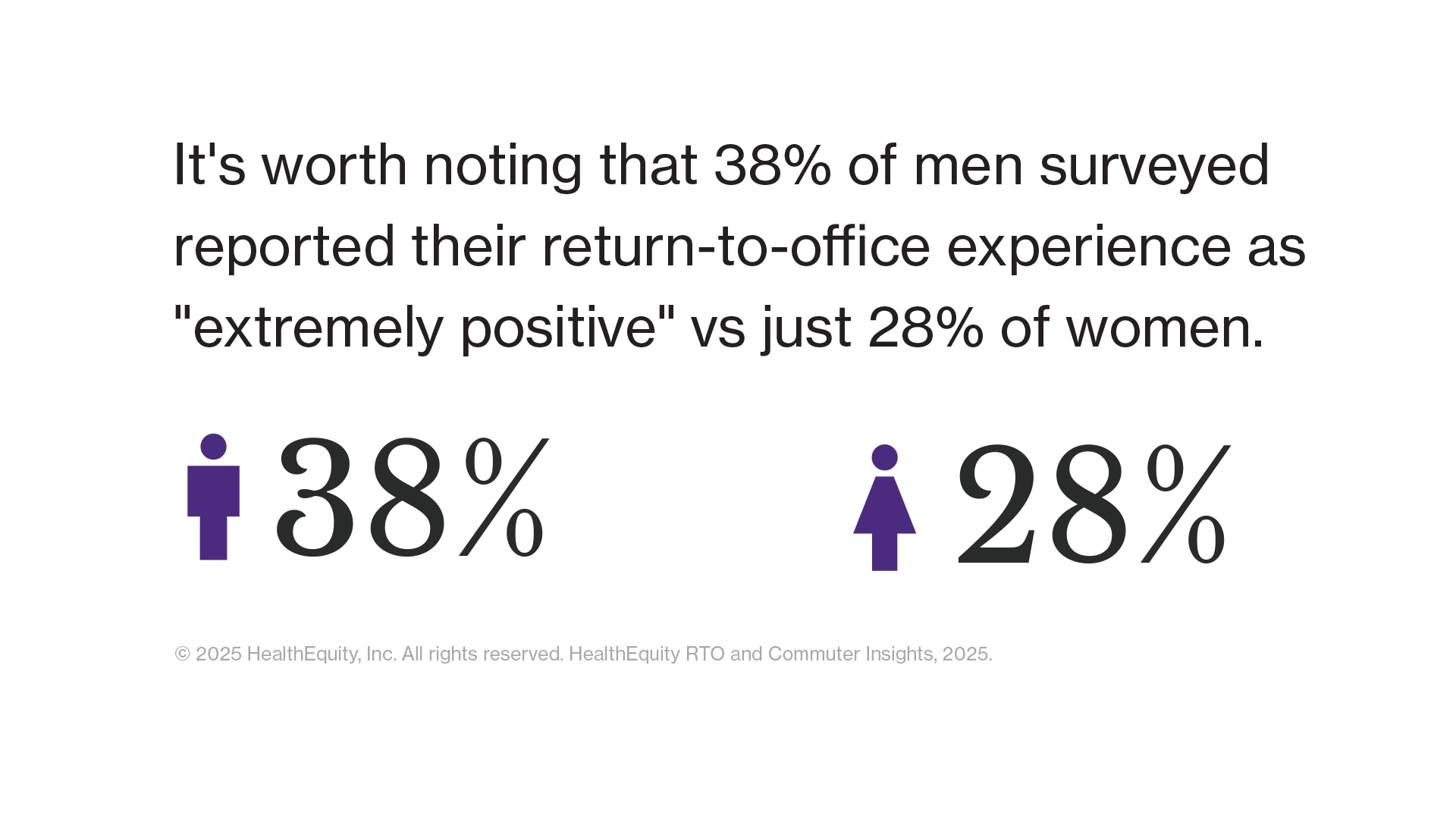
This gap highlights the need to consider individual experiences during the RTO transition. Employers who acknowledge and address these differences can create a supportive work environment for all.
Practical takeaway: Treat RTO like a change-management initiative, not a schedule update. Your communication plan and manager enablement will shape how “fair” and “clear” the shift feels.
What key factors create a positive return-to-office experience?
Prioritizing the right elements can make a big difference in how positive the return to office feels:
- Clear communication: Employees who rated their RTO experience as “extremely positive” pointed to clear policies and expectations from their employers.
- Flexibility: Eighty-seven percent of employees said flexible work schedules were important to help them excel at their current role.
- Performance impact: Eighty-three percent of employees who had an extremely positive RTO experience reported improved work quality.
- Collaboration and connection: Many said returning to the office revived collaboration and strengthened workplace connections.
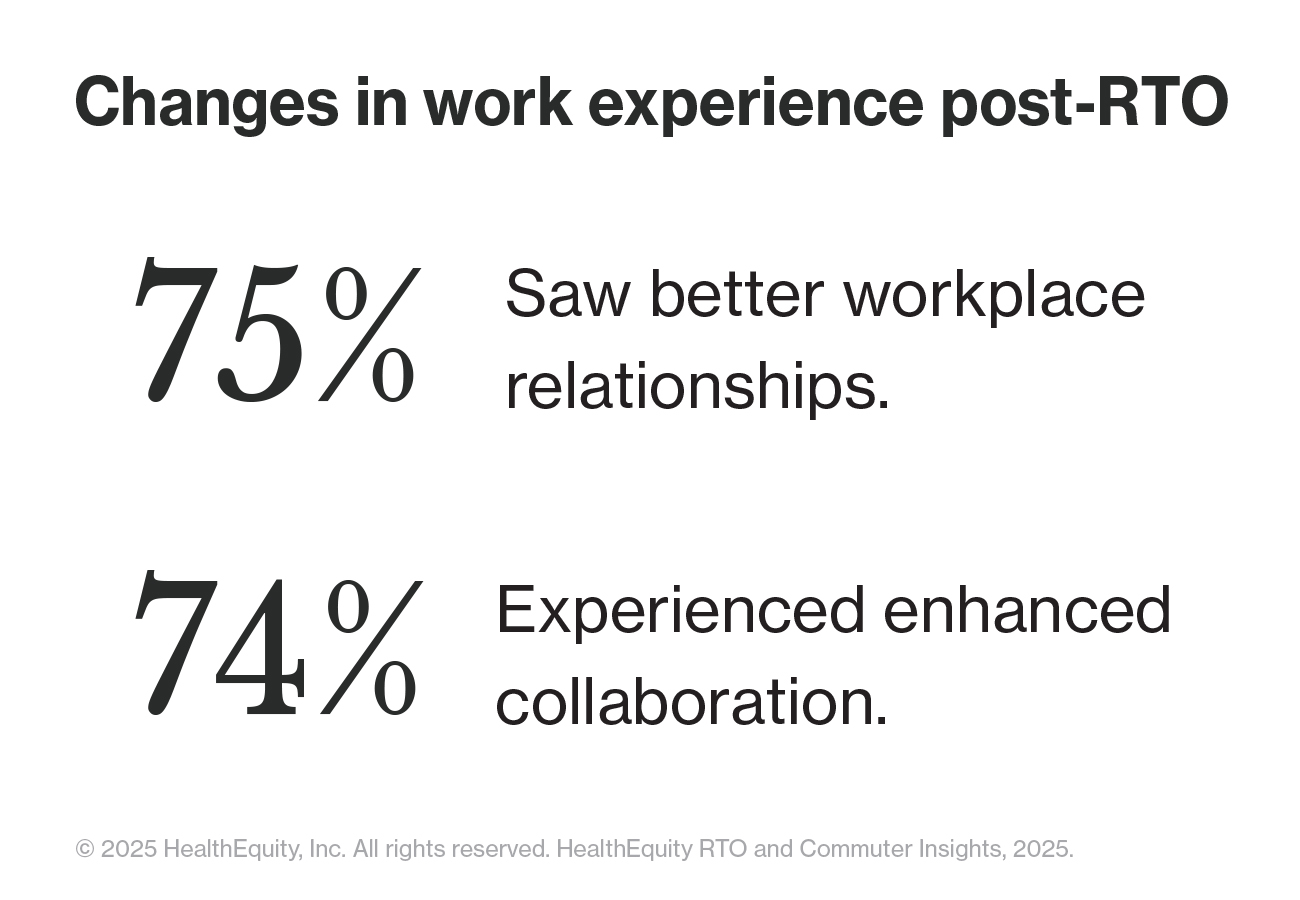
“The most valuable part of returning to the office has been the opportunity for spontaneous collaboration and face-to-face interaction. It fosters stronger team connections, quick problem-solving, and a more vibrant company culture that’s hard to replicate remotely.” ~ Survey respondent
Practical takeaway: Publish a one-page RTO “how it works” guide, including who’s eligible for what schedule, how exceptions work, and where to get help. Reinforce flexibility where possible, even if you can’t offer full remote options.
What motivates employees to attend the office more often?
If you want to boost in-office attendance, it takes more than just expecting employees to show up. When asked what would encourage them to come into the office more frequently, respondents chose key factors that would make a difference.
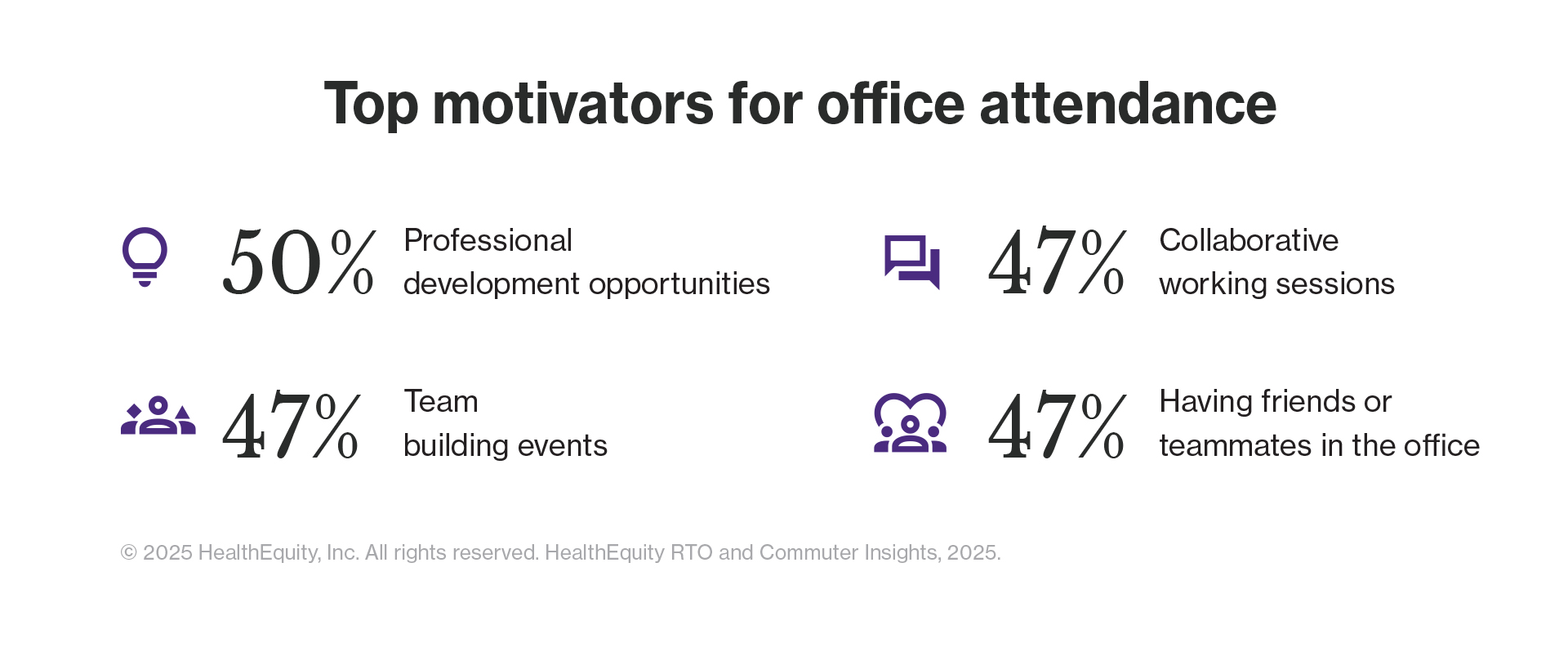
Employees clearly crave a space that promotes growth, learning, and collaboration (bonus points if their friends or teammates are there too). Employers who lean into this by creating meaningful in-office experiences may naturally see increased turnout.
Practical takeaway: Coordinate “anchor days” by team so employees don’t commute just to sit on video calls. Gather quick feedback monthly so you can refine what’s working instead of guessing.
How do commuting costs affect office attendance?
“The extra cost and time required for the commute is the most significant challenge of returning to the office.” ~Survey respondent
Commuting has become a major hurdle for employees returning to traditional office life, and the cost of getting there is one of the biggest challenges they face. More than half of employees surveyed reported commuting costs as their main barrier to more frequent office attendance, followed closely by family and home responsibilities.
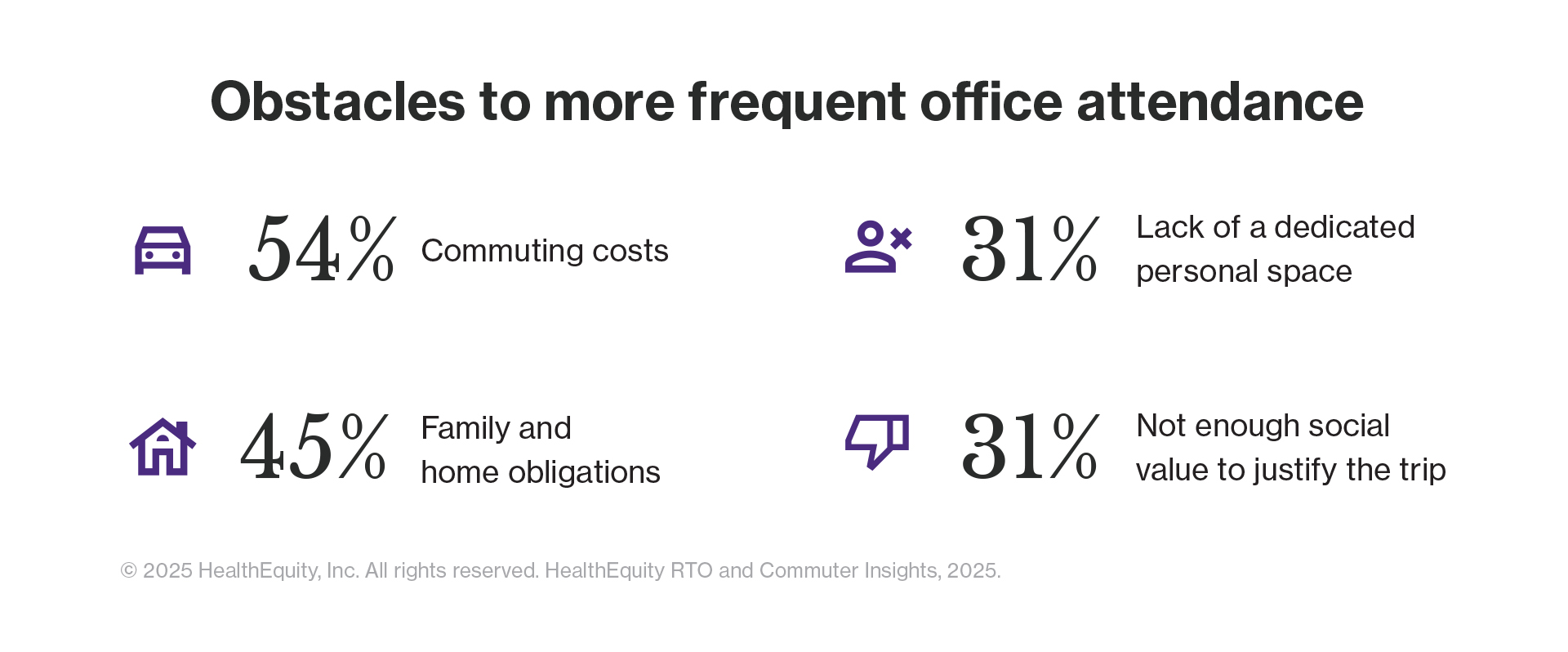
This isn’t surprising when you consider that daily expenses average $14 for commuting and $8 for parking, which means employees can spend up to $135 per week, or $5,725 annually, just to get to work.² That’s a hefty slice of anyone’s paycheck, especially when paired with today’s rising cost of living.
While most people drive to the office, people who take public transit feel the pinch of commuting costs even more than those who don’t. They were 33% more likely to say these expenses get in the way of going to the office more frequently.
Interestingly, our survey showed that 59% of employees worried about commuting costs selected commuter benefits, more than any other factor, as a motivator for more frequent office attendance.
Practical takeaway: If you don’t offer commuter benefits, build a simple cost-and-retention business case using commuting as a measurable barrier to attendance. If you do already offer commuter benefits, elevate them as a core piece of your RTO plan.
How can commuter benefits help offset commuting costs?
“RTO takes more time out of my day and costs me more money.” ~Survey respondent
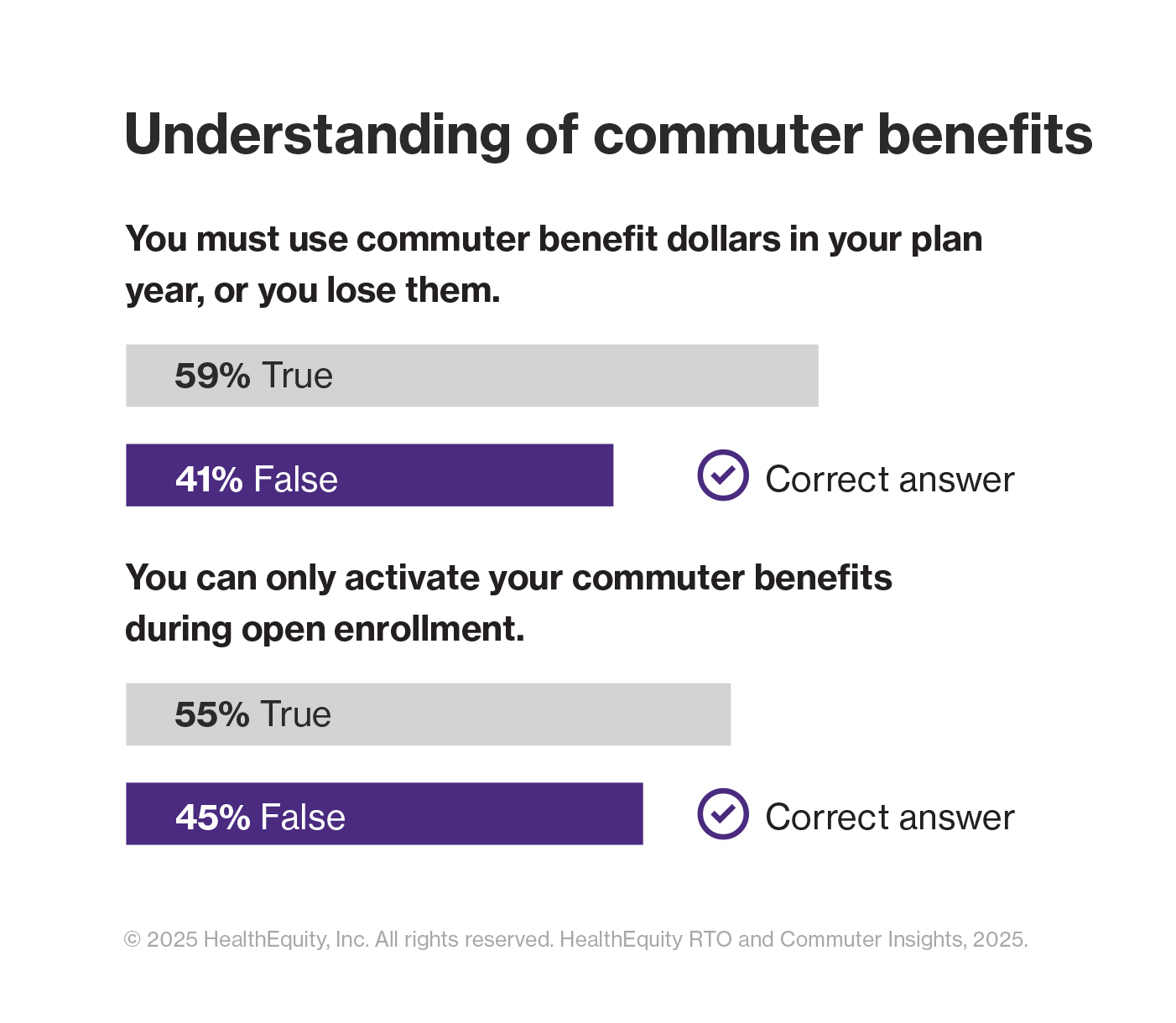
Commuter benefits can help employees save money and make returning to the office more attractive, but many don’t fully understand how they work. Our survey found that while two-thirds of employees claimed to understand commuter benefits, their incorrect answers to True/False questions revealed some misconceptions.
For instance, a majority think commuter benefits can only be activated during open enrollment or that unused funds disappear at the end of the plan year, neither of which is true. Educating your employees on these details can empower them to make informed decisions and make the most of available programs.
What’s more, when asked why they don’t use commuter benefits, employees pointed to two main reasons: their employer doesn’t offer them, or they don’t think the benefit applies to their commute.
However, commuter benefits allow workers to set aside pre-tax dollars, up to $325 per month for transit and another $325 for parking, to cover commuting costs for subway, bus, train, vanpool, or qualified parking expenses.
By lowering their taxable income, employees can potentially save about 20% on commuting costs, which can add up to more than $2,300 a year.³ It’s a simple way to keep more money in your employees’ pockets while easing the financial strain of getting to the office.
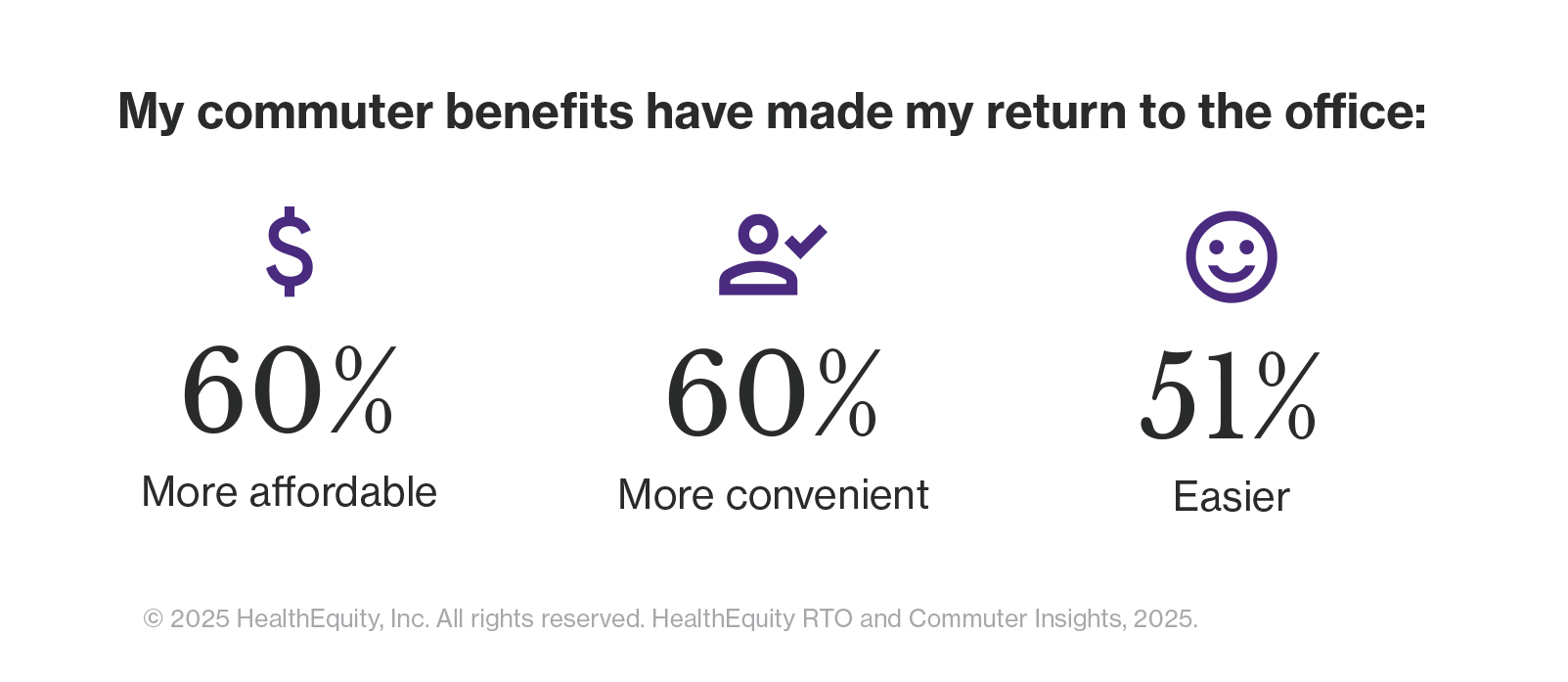
In fact, more than half of employees surveyed shared that using commuter benefits has made returning to the office more affordable.
Practical takeaway: Train HR and benefits teams on the top 5 questions and misconceptions so employees feel more confident using commuter benefits.
How can you re-envision return to office with empathy and support?
At the heart of it, the RTO experience isn’t about forcing employees back to pre-pandemic norms. Rather, it’s reinventing what the workplace can look like when we find the right balance between flexibility, connection, and support.
By lessening commuting stress, investing in professional and personal growth opportunities, and prioritizing open communication, you can create a work environment that employees genuinely want to be part of.
Organizations that build their RTO strategy with empathy and understanding may find they have an edge in retaining talent, boosting employee satisfaction, and creating places where people not only work but excel.
Frequently asked questions
References and disclosures
¹ Pew Research Center survey. 2024.
³ Estimated savings are based on an assumed combined federal and state income tax bracket of 20%. Actual savings will depend on your taxable income and tax status.
HealthEquity does not provide legal, tax or financial advice.